Pattaya Hotel Security Deposits and Hidden Fees: What to Know Before Check-In
Pattaya room rates are usually clear. What trips people up is the money around the room. A Pattaya hotel security deposit is often collected at check-in. It is collected to cover small charges that may appear on the bill when you leave.
It’s all standard practice across the city. Once you know how it works, check-in is quicker, checkout is cleaner, and your travel money stays available for the things you came for.
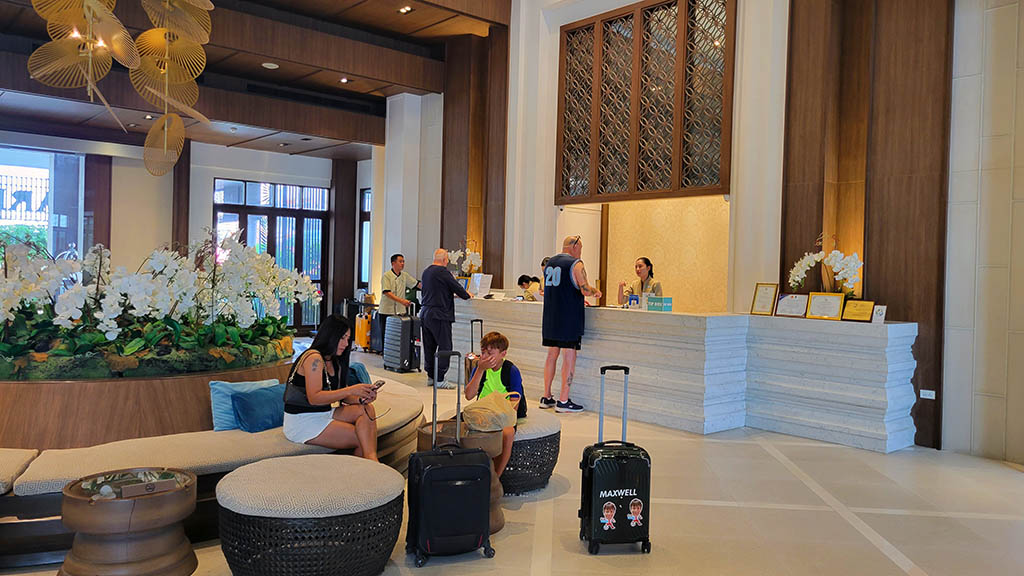
The Check-In Security Deposit
Almost every hotel in Pattaya takes a security deposit at check-in, usually 1,000 – 2,000 Baht per room. Some of the more upmarket places ask for more. It covers the minibar, damage, lost keys and anything else housekeeping finds when they check the room at the end of your stay.
This is on top of your room rate, even if you’ve already prepaid through a booking site. Think of it as cash you won’t have access to until you check out.
Don’t Exchange Money at Reception
Turn up with only foreign cash and the front desk will happily change it for you. Their rates are poor, though, and on a few hundred dollars the difference is roughly the price of a decent dinner.
Get your Baht sorted before you reach the hotel. At Suvarnabhumi, walk past the counters in the arrivals hall and go down to the basement level near the Airport Rail Link, where the exchange booths give noticeably better rates. If you are in a rush or jet-lagged, the exchange counters in the arrivals hall are still far better than the hotel front desk.
On arrival, change only enough to cover your transport to Pattaya, the deposit and a little extra for contingencies.
You may consider withdrawing cash from an airport ATM. There are ATMs in the terminal. However, you need to consider another issue. One requirement for entering Thailand is that you may need to show the equivalent of 20,000 Baht in cash. For details, see Thailand Visa.
Cash vs Credit Card Holds
Most hotels will also let you leave the deposit as a credit card pre-authorisation. In Thailand, cash is the far better choice.
| Cash Deposit | Credit Card Hold | |
|---|---|---|
| When you get it back | At checkout, in your hand | 14 – 30 days for most foreign banks |
| Effect on your funds | None after checkout | Blocks part of your available limit |
| Exchange rate risk | None | Possible conversion differences on release |
| Multiple hotels | The same cash moves with you | Holds stack up |
Pay in cash and the process is simple: staff check the room at checkout, and if it’s fine, you get the full amount back on the spot.
A card hold works differently. The hotel releases it at their end fairly quickly, but your own bank decides when the money actually frees up, and foreign banks take their time. Move between two or three hotels on one trip and those holds pile up, tying up a fair slice of your credit limit for weeks.
Keep the Paper Deposit Receipt
Pay a cash deposit and you’ll be handed a paper receipt. Hold onto it, because most hotels may not refund the deposit without the original. With shift changes and staff turnover, the person serving you at checkout often wasn’t at the desk when you arrived, and they use the receipt to look you up.
The easy habit is to fold it and keep it inside your passport. That way it stays with the one document you won’t misplace, it doesn’t get binned with a pile of 7-Eleven receipts, and it’s already in your hand at checkout.
Lose it and most hotels can still refund you after checking their records and your ID. Just expect a wait while a manager sorts it out.
Stained Bedsheets and the Housekeeping Fix
White hotel sheets mark easily. Massage oil, suntan lotion, fake tan, hair dye and a period starting unexpectedly are the usual culprits, and stained linen is one of the most common reasons a deposit comes back short.
At checkout, reception may try to charge a laundry fee or the full cost of replacing the sheets, and that figure can be steep. Arguing about it at the desk rarely gets you anywhere.
It’s easier to sort out before you leave the room. Put a 100 Baht note on the bed for the housekeeper and they’ll deal with the sheets there and then, so the room check comes back clean. It costs less than the fine and saves an awkward chat at reception.
With massage oil, a bath towel laid down first prevents most of the problem anyway.
Other Common Extra Charges
A few smaller fees regularly turn up on checkout bills around Pattaya.
| Charge | Typical Cost | What to Know |
|---|---|---|
| Empty glass water bottles | 20 – 50 Baht each | The water is free; the bottle isn’t |
| Lost keycard | 300 – 1,000 Baht | Physical brass keys sit at the top of the range |
| Early check-in | Varies; often a half-day rate | Applies before standard 2:00 PM check-in |
| Metered electricity | Charged per unit used | Common on weekly and monthly deals |
Complimentary Water in Glass Bottles
Plenty of hotels supply free drinking water in reusable glass bottles. Drink as much as you want, but leave the empties in the room. The hotel sends full crates back to the distributor and gets charged for anything missing, so you’ll pay 20 – 50 Baht for every bottle that’s gone.
So no taking them down to the beach, and don’t throw them out.
Lost Keycards and Room Keys
Losing a plastic keycard usually costs around 300 – 500 Baht. Older hotels that still hand out physical brass keys charge more, up to 1,000 Baht, since a missing key can mean changing the lock.
Most keys go missing on a night out, left in a Grab or on a bar stool.
Early Check-In
Flights from Europe and Australia often get into Bangkok early in the morning, which puts you in Pattaya well before the usual 2:00 PM check-in. Hotels will mind your bags for free, but whether you get into a room early depends on what’s available.
If a room’s ready, some hotels let you in at no extra cost. Others charge a half-day rate, often around half the nightly price. If you want a bed waiting the moment you arrive, booking the night before is usually simpler, particularly at budget hotels where the extra night doesn’t cost much more.
Metered Electricity on Weekly and Monthly Deals
Long-stay rates at budget hotels and serviced apartments often leave electricity out. You pay for what you use, usually at a higher per-unit rate than the government tariff, and running the air-con all day is what pushes the bill up.
Before you sign up for a weekly or monthly deal, ask whether electricity is included or metered, what the rate per unit is, and whether water is billed separately. Take a photo of the meter on the day you move in so there’s nothing to argue about later.
The Checkout Room Check
When you hand your key back, reception sends housekeeping up to check the room before they return your deposit. This normally takes 5 – 10 minutes, and longer during the morning checkout rush.
If you’ve got a taxi or bus booked, build that time in. Check out a bit early and pay for any minibar items at the desk so nothing catches you out.
Practical Check-In Checklist
- Change money when you arrive, at the basement counters at Suvarnabhumi or a street exchange booth, not at the hotel desk.
- Keep 1,000 – 2,000 Baht per room set aside for the deposit, separate from your spending money.
- Pay the deposit in cash rather than on a card so you get it back at checkout, not weeks later.
- Tuck the receipt inside your passport, since no receipt usually means no quick refund.
- Carry a few 20 and 100 Baht notes for housekeeping and for sorting out small issues on the spot.
- Leave the glass water bottles in the room. Empty is fine; missing costs money.
- On long stays, ask how electricity is charged and photograph the meter on day one.
- Allow ten minutes at checkout for the room check.